Passion Flower and Lemon Balm for Dogs: Discovering Natural Calm and Anxiety Relief
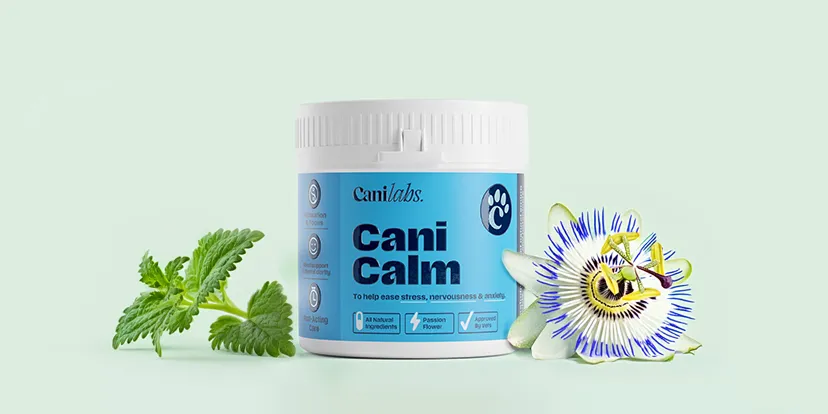
Table of Contents
- A Rich Heritage: The Historical Roots of Passion Flower and Lemon Balm
- The Story of Passion Flower: From Native American Healers to Global Sedative
- Lemon Balm’s Timeless Legacy: The “Elixir of Life” for Mind and Body
- The Science-Backed Benefits: Why Passion Flower and Lemon Balm Shine for Dogs
- Passion Flower Benefits for Dogs: A Natural Brake on Stress
- Lemon Balm Benefits for Dogs: Gentle Mood and Gut Support
- How Passion Flower and Lemon Balm Work: The Mechanisms Behind the Magic
- Safety, Dosage, and Best Practices for Using Passion Flower and Lemon Balm in Dogs
- Cani Calm: Your Go-To Blend for Comprehensive Canine Calm
- Final Thoughts: Embrace Natural Harmony for Your Dog Today
As a dog owner, you’ve likely witnessed the heartbreaking signs of anxiety in your canine companion, pacing during thunderstorms, destructive chewing from separation stress, or restless nights that leave everyone exhausted. In a world where pharmaceutical options can come with heavy or sedative side effects, natural remedies like passion flower for dogs and lemon balm for dogs offer a gentle, effective alternative. These time-tested herbs have been soothing nerves for centuries, and today, they’re making waves in veterinary wellness.
In this comprehensive blog, we’ll dive deep into the history, science, benefits, and safe use of passion flower (Passiflora incarnata) and lemon balm (Melissa officinalis) specifically for canine health. Whether your pup suffers from noise phobias, travel jitters, or general unease, understanding these herbs can transform their quality of life. And if you’re looking for a ready-to-use solution, our Cani Calm blend harnesses the power of both, delivering 50mg of passion flower and 180mg of lemon balm per scoop for targeted calming action.
Let’s explore why these herbs are the ultimate duo for passion flower and lemon balm benefits for dogs.
A Rich Heritage: The Historical Roots of Passion Flower and Lemon Balm
To appreciate the potency of these herbs, it’s essential to trace their journeys from ancient traditions to modern pet care. Both have stood the test of time as natural allies against stress and unrest.
The Story of Passion Flower: From Native American Healers to Global Sedative
Passion flower, with its exotic, intricate blooms resembling a crown of thorns, earned its name from 16th-century Spanish missionaries who saw religious symbolism in its structure. Native to the southeastern United States, Central, and South America, it was first documented for medicinal use by indigenous tribes like the Cherokee and Houma as early as the pre-Columbian era.
These communities brewed the leaves, vines, and flowers into teas for treating restlessness, anxiety, nervous stomach issues, high blood pressure, and even menopausal symptoms. Captain John Smith, the English explorer, noted its use among Native Americans in the early 1600s for food, drink, and healing. By the 19th century, passion flower had crossed the Atlantic, gaining fame in Europe and North America as a remedy for insomnia and nervous disorders. Herbalists prized it as a “nervine relaxant,” calming overactive minds without dulling the senses.
Today, its legacy lives on in veterinary applications, where passion flower for dogs echoes these ancient practices, promoting relaxation without the grogginess of synthetic drugs. For a deeper historical dive, check out this USDA ethnobotany profile on purple passionflower.
Lemon Balm’s Timeless Legacy: The “Elixir of Life” for Mind and Body
Lemon balm, or Melissa officinalis, boasts an even older pedigree, with records dating back over 2,000 years to the ancient Greeks and Romans. The Greek scholar Theophrastus dubbed it “honey leaf” for its bee-attracting lemon-scented foliage, and it was a staple in Roman gardens to soothe digestive woes and lift spirits. By the Middle Ages, European herbalists like Paracelsus called it the “elixir of life,” using it to combat melancholy, fevers, and even the plague, believing it could “drive away all melancholy cares.”
In traditional Chinese and Ayurvedic medicine, lemon balm addressed everything from hypertension to insomnia. Its calming reputation grew through the Renaissance, when it was infused into cordials for nervous tension. Fast-forward to today, and lemon balm for dogs taps into this heritage, offering a non-sedating balm for anxious pups. Explore its full historical context in this comprehensive Wikipedia overview.
These herbs aren’t fads, they’re foundational to herbal medicine, now backed by science for canine companions.
The Science-Backed Benefits: Why Passion Flower and Lemon Balm Shine for Dogs
Modern research validates what healers knew intuitively: passion flower and lemon balm excel at easing canine anxiety. While most studies focus on humans or lab animals, veterinary extrapolations (and emerging pet-specific trials) show promising results for dogs. Here’s what the evidence says.
Passion Flower Benefits for Dogs: A Natural Brake on Stress
Passion flower for dogs primarily targets anxiety-driven behaviors like barking, trembling, and hyperactivity. Key perks include:
- Anxiety Reduction: It helps with separation anxiety, noise phobias (e.g., fireworks), and situational stress, promoting a sense of calm without sedation.
- Improved Sleep: Ideal for restless nights, it gently eases pups into restorative rest.
- Nervous System Support: By modulating brain chemistry, it curbs overactive “fight-or-flight” responses.
A systematic review in Nutrients highlights passion flower’s role in neuropsychiatric disorders, showing anxiolytic effects comparable to pharmaceuticals but with fewer side effects, effects that translate well to veterinary use. Another study in Planta Medica demonstrated how Passiflora incarnata extracts elicit GABA currents in hippocampal neurons, mimicking benzodiazepines for anticonvulsant and anti-anxiety benefits. In dogs, holistic vets report reduced stress in clinical settings, with one rat study (applicable to mammals) showing enhanced memory and lowered anxiety post-extract.
For pet parents, this means fewer frantic vet visits and more peaceful home life.
Lemon Balm Benefits for Dogs: Gentle Mood and Gut Support
Lemon balm for dogs complements passion flower with its uplifting, non-drowsy calm. Standout advantages:
- Stress and Behavioral Relief: It softens obsessive-compulsive tendencies and improves overall demeanor.
- Digestive Harmony: Anxiety often upsets tummies, lemon balm soothes nausea and bloating.
- Cognitive Boost: Enhances focus and mood, beneficial for senior dogs with mild cognitive decline.
A 2025 study in BMC Veterinary Research demonstrated that Melissa officinalis extract supplementation significantly improved behavioral scores in beagle dogs after four weeks, reducing stress without affecting appetite or energy, while metabolomic analysis revealed its calming mechanism via GABA pathway modulation. Human trials, like one in Phytotherapy Research, confirm its efficacy for mild psychological disturbances and sleep issues, mirroring benefits in pets. Another PMC review notes its role in veterinary herbal medicine for sedation and anti-anxiety effects in animals.
Together, passion flower and lemon balm benefits for dogs create synergy: passion flower’s deeper relaxation pairs with lemon balm’s brightening clarity.
How Passion Flower and Lemon Balm Work: The Mechanisms Behind the Magic
These herbs aren’t placebos, their actions are rooted in neurochemistry.
Passion flower boosts gamma-aminobutyric acid (GABA), the brain’s primary “chill-out” neurotransmitter. By binding to GABA receptors, it inhibits over-excitation, reducing anxiety signals much like anti-anxiety meds, but naturally. A study in the Journal of Ethnopharmacology confirmed this via in vitro hippocampal neuron tests, showing anticonvulsant properties ideal for storm-phobic pups.
Lemon balm similarly enhances GABA but through inhibition of GABA transaminase, the enzyme that breaks it down, leading to sustained calm. Rosmarinic acid in the leaves also curbs stress hormones like cortisol. Research in Nutrients links this to anti-stress effects in foods, with animal models showing modulated GABA activity for tranquility.
In dogs, these pathways mean faster recovery from triggers, fostering resilience over time.
Safety, Dosage, and Best Practices for Using Passion Flower and Lemon Balm in Dogs
Good news: Both herbs are ASPCA-listed as non-toxic to dogs. Purple passion vine and lemon balm pose no risks when used properly. Side effects are rare but can include mild GI upset if overdone — start low and monitor.
- Dosage Guidelines: For general use of raw herbs or custom preparations, passion flower ranges from 0.23–0.45mg per kg of body weight daily, and lemon balm from 0.45–0.91mg per kg. These are starting points for teas or tinctures — always consult your vet for breed/size specifics.
- Forms: Teas, tinctures, or supplements like Cani Calm offer precise dosing options. Cani Calm provides 50mg passion flower and 180mg lemon balm per scoop, with a feeding guide tailored to dog size (1–4 scoops daily), delivering a higher, vet-formulated concentration for effective stress relief.
- Cautions: Avoid in pregnant dogs (passion flower’s uterine effects) or those on sedatives (potential interactions). Introduce gradually over a week and consult your vet to adjust based on your dog’s response.
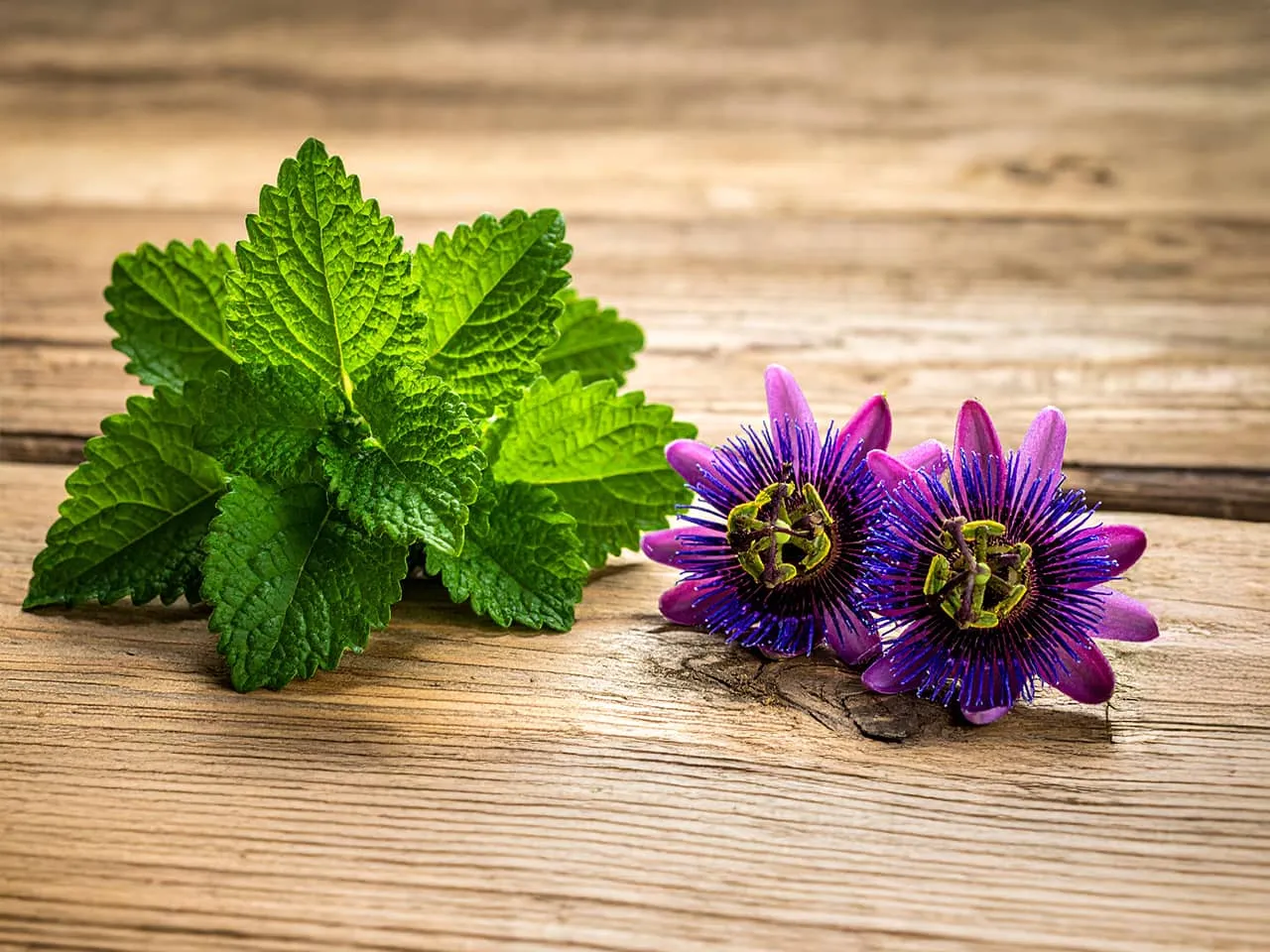
Cani Calm: Your Go-To Blend for Comprehensive Canine Calm
As well as premium passion flower and lemon balm, Cani Calm includes other beneficial ingredients like L-Tryptophan and Taurine in a vet-formulated scoop, tailored for daily stress support. At 50mg passion flower and 180mg Melissa officinalis per serving, it’s potent yet palatable, mix it into meals once daily for fuss-free administration.
Final Thoughts: Embrace Natural Harmony for Your Dog Today
From ancient elixirs to cutting-edge canine care, passion flower and lemon balm stand as pillars of natural anxiety relief. Their proven benefits, backed by history and science, make them indispensable for dogs facing modern stressors. Whether brewing a tea or scooping Cani Calm, you’re honouring a legacy of healing.
Ready to see the difference? Consult your vet and start your pup’s calm journey. Have you tried passion flower for dogs or lemon balm for dogs? Share in the comments below, we’d love to hear your stories!